
02: Heirlooms.
The Weight of Witness: Moving Beyond Clumsy Despair in the Age of Genocide.

Over the past several months I have been dusting off and finding the right place for trinkets, little ceramics or pieces of art that once belonged to my grandparents and other family as I started arranging my newly decorated room. I also started to collect furniture with the genuine thought in mind of who I would pass it onto when I’ve gone. There is no grand inheritance here, but these seemingly ordinary objects keep loved ones beside me as I muddle through recent times.
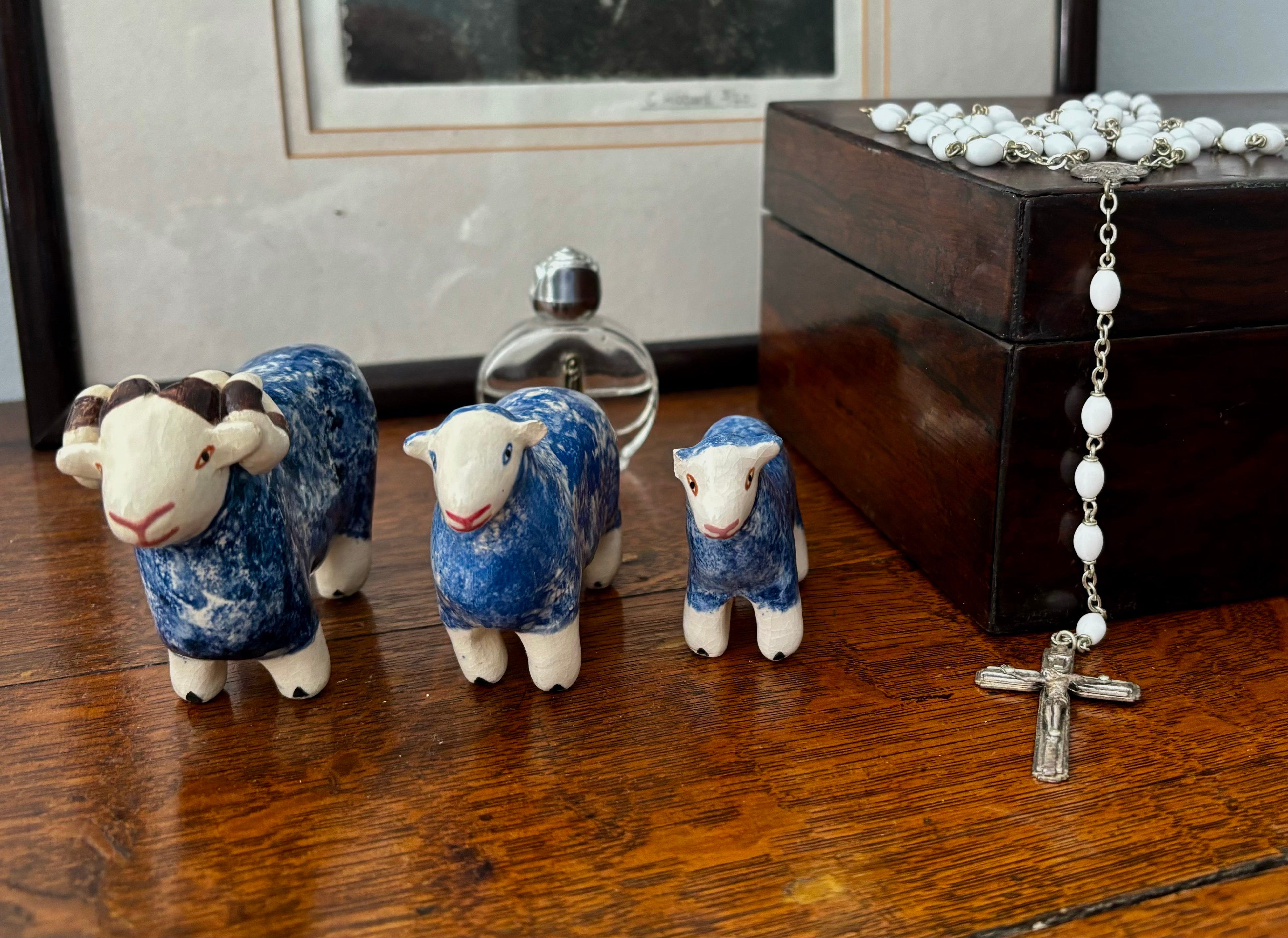
I had told myself that this place online would be a space of public reflection and somewhat naively believed that I would be able to steamroll ahead with my planned pieces despite the tragedies that lit up our phones. Yet, I have been unable to look away, stayed totally fixed to one spot, Palestinian faces have been etched in my mind as I rearranged the furniture and dusted off books that have been in storage. Struggling to find the right words to describe the total disparity between the comfort of my bed and witnessing fathers carrying their babies body parts without a home let alone a grave.
I have been thinking about Palestinian homes now dust and rubble and the unfathomable loss of family homes filled with laughter or song or hushed worried talks after the kids have gone to bed. Children now in camps with nothing to play with, unconsciously gripping onto their culture and the inherited history, through rhymes and games before being murdered in their make-shift beds.
As Edward Said reflects in his work, "Reflections on Exile and Other Essays" this is an inherited displacement,
"Palestinian life is scattered, discontinuous, marked by the artificial and imposed arrangements of interrupted or confined space, by the dislocations and unsynchronised rhythms of disturbed time." 1
I can’t help to think not only about the loss of precious human life but the little artefacts that make up human existence now lost forever. Things that make our bedrooms our own, a cross stitch your grandmother made the baby, pressed flowers from a wedding, a great grandfathers watch. These mementos that sew together a personal history, one that threads a people together.
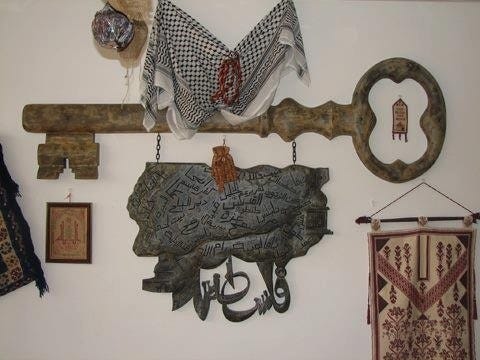
But what happens when those archives are destroyed, when the heirlooms and artefacts that hold the keys to our collective memory are lost forever to the destruction and dissemination of a people? With each passing day, the very fabric of Palestinian cultural heritage, woven over generations and centuries, is being unravelled before our eyes, and I find myself struggling to comprehend the weight of it all. I’ve found myself, like a scorned child, asking this is what we are inheriting? Another man-made scar on our collective history.
I have to confess, being a witness to the unrelenting violence and attempts of total cultural erasure of a people from afar, I had fallen into a state of grief. The temptation to become paralysed by this left a grip in my stomach relentlessly, in a somewhat dissociative state, sharing posts online, politically engaging but mostly, to be honest, crying at night or the early hours of the morning. In times like this my Catholic upbringing starts to work it’s way to the surface and I find myself praying or cursing an abandoned sky.
It wasn’t until I came across James Baldwin’s thoughts on this kind of selfish despair that I have been able to shake myself loose, the part of me sat in the corner banging her head against the wall returned and helped find some more coherent thoughts. In his 1963 work, "The Fire Next Time," Baldwin critiques the tendency to cling onto hatred and despair in the face of injustice, He writes,
"I imagine one of the reasons people cling to their hates so stubbornly is because they sense, once hate is gone, they will be forced to deal with pain. There is a kind of miserable selfishness in this despair, for one cannot live in total despair and do nothing."2
In the context of what we are witnessing in Palestine, it is all too easy to fall into a similar trap. Witnessing this immense level of pain and heartbreak, the destruction and total disregard of innocent life can be overwhelming. Especially to the extremes in which we are witnessing, however, Baldwin reminds us that it is a, “miserable selfishness” in allowing ourselves to be all-consumed by these feelings.
The only way I have been able to move beyond total paralytic shock is recognising what a luxury that truly is. Being witness is not the ultimate burden, the only way to inherit something more than a slow-moving apocalypse is by forcing your way through the luxury of despair while others suffer the blunt force of oppression and violence. Although the extremely strange mental gymnastics it takes to continue after seeing some of the most violent atrocities I’ve ever seen, the inheritance for us in the West is one of responsibility and kinship.
So with heirlooms in the forefront on my mind I started researching the preservation of Palestinian culture and what positive impacts we can promote and support from our side of the world. One example of this being the Palestine Seed Heirloom Project Founded by Vivien Sansour, their form of resistance being one of environmental conservation. Palestinian farmers have suffered greatly in occupied land and now with the present destruction of land and environmental impacts from bombings, the preservation of ancient seeds is a precious act of resilience. You can read more about Vivien and their work on her website linked here. I’ve listed other resources at the bottom of the page that may be a good jumping off point.
Ultimately, the heirlooms that we inherit are more than simple things we collect – they are tangible reminders of our shared humanity, of the unbreakable threads that bind us together through the similarities of love and family. I hope we continue to reach out for each other and support the preservation of stories of oppressed people amongst the destruction of their homes, weaving new stories of solidarity, resistance and hope.
Resources:
Bisan - (Activist/Journalist reporting directly from Gaza)
Information on donating/fundraising for Medical Aid for Palestinians
Palestine Seed Heirloom Project - keeping native Palestinian seeds from extinction
Palestine Film Institute - archiving Palestinian film making/stories
Haymarket books - currently have 4 free e-books in the fight to combat misinformation on Palestine
Sources:
Edward W. "Reflections on Exile." In Reflections on Exile and Other Essays, 173-186. Cambridge, MA: Harvard University Press, 2000.
Baldwin, James. "The Fire Next Time." In The Fire Next Time, 13-141. New York: Dial Press, 1963.